
Bad Tie Rod Symptoms and When to Replace Them
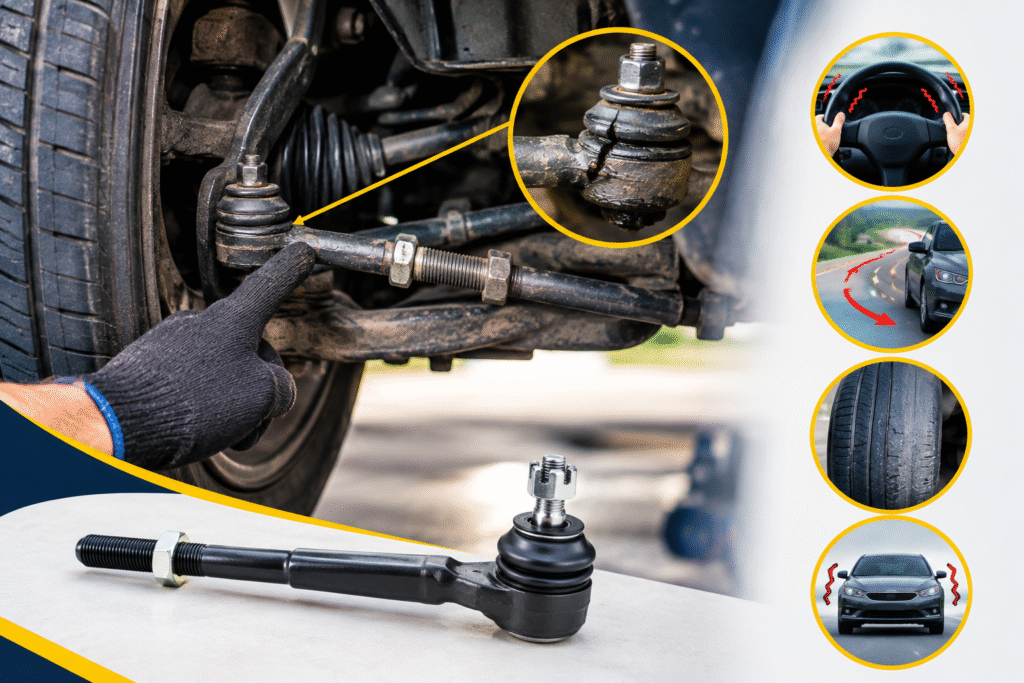
A clunk over a pothole. A car that drifts a little on its own. A steering wheel that feels like it has extra slack before the tires actually respond. These are usually the first clues that a tie rod is wearing out and we run into them constantly across our Pickering and Etobicoke bays. Tie rods tend to fail quietly right up until the moment they do not. Here is what worn tie rods look and feel like on the road along with a few details most guides never get around to mentioning. What a Tie Rod Does A tie rod links your steering rack to the wheel itself, turning the motion of your steering wheel into an actual change in direction. Most cars use two per side which is an inner end and an outer end joined together by a threaded sleeve. Wear either one down and that connection loosens up, so the wheel stops answering to the wheel the way it should. The Symptoms You Will Notice First A knock or a clunk over bumps is usually the clearest sign and it tends to come from the front end, tied directly to steering input rather than the suspension bouncing on its own. A car that pulls or wanders slightly without you touching the wheel is another giveaway, along with steering that feels loose, as if there is a beat of delay before the wheels catch up. Watch your tires too. Uneven wear along one edge or a vibration that builds the faster you drive, both point the same direction. The Boot Is Your Earliest Warning, Not the Clunk Most articles jump straight to noise and play and the damage is already done by the time you hear a clunk. Every tie rod end is wrapped in a rubber boot that keeps grease in and dirt out. Once that boot cracks or splits road grime and moisture get inside and the joint starts wearing from the inside long before you feel anything through the wheel. A torn boot caught early is a cheap fix. A tie rod that has been running dry for months is not. This is one reason a visual inspection during routine service catches problems a driver would never notice on their own. Inner Versus Outer Tie Rods Do Not Wear the Same Way Lumping these together misses something worth knowing. The outer end sits closer to the wheel and takes more direct impact, so it tends to announce itself first, usually with a knock over bumps. The inner end lives further back tucked inside the boot near the rack. It tends to fail more quietly at first showing up as a faint shimmy at speed or a wheel that feels a touch off before it ever produces a clunk you can hear. The distinction matters for your wallet too, since an inner tie rod takes more labor to replace than an outer one. Tie Rod or Ball Joint? Here Is How to Tell These two get mixed up all the time, since both introduce play into the front end. Listen for when the noise happens. A ball joint usually cricks or pops specifically while turning the wheel at low speed. A tie rod tends to knock over bumps whether you are turning or driving in a straight line. There is also a simple physical check. Have someone gently rock the steering wheel side to side while the car sits still and watch the tire. If it visibly moves before the wheel input reaches it, the play is most likely in the tie rod. Is It Still Safe to Drive? Mild wear is not usually an emergency, but it only moves in one direction, so putting it off does not make sense either. A tie rod that fails completely can mean a total loss of steering on that wheel which is exactly why any clunk or play gets checked right away rather than watched. Ontario’s official vehicle inspection standard actually lists a bent, broken or cracked tie rod as automatic grounds for failure which says something about how seriously this part gets treated from a safety standpoint. When Replacement Makes Sense A clunk, a pull, uneven tire wear or noticeable play in the wheel all mean it is time for an inspection. Once a tie rod gets replaced, a wheel alignment usually follows right after, since even a properly installed new part shifts the wheel angle slightly from where the worn one had settled. Get Your Tie Rods Checked at Supreme Lube If your steering feels loose, knocks over bumps or your car seems to drift on its own, it is worth having someone actually look before it becomes a bigger repair. We offer walk in steering and suspension inspections with no appointment needed, at both our Pickering and Etobicoke locations. Learn more about our shop or reach out to our team to get it looked at properly. FAQs Should inner and outer tie rods be replaced together? Not necessarily. Many technicians replace whichever end shows measurable play and leave the other if it still tests solid, though both get checked during the same visit. Is it safe to drive with a bad tie rod? Light wear is not usually urgent, but noticeable play or a clunk should be looked at soon, since a full failure means losing steering control on that wheel. How much does tie rod replacement typically cost? It depends on your vehicle and whether one side or both need attention, since parts, labor and the alignment afterward all factor into the total. An inspection is the only real way to get an accurate number. Does replacing a tie rod always mean I need an alignment? Almost always, yes. Even a properly installed new tie rod shifts the wheel angle slightly, so an alignment afterward keeps the car tracking straight. How many kilometers do tie rods usually last? There is no fixed number since it comes down to roads and driving habits,