
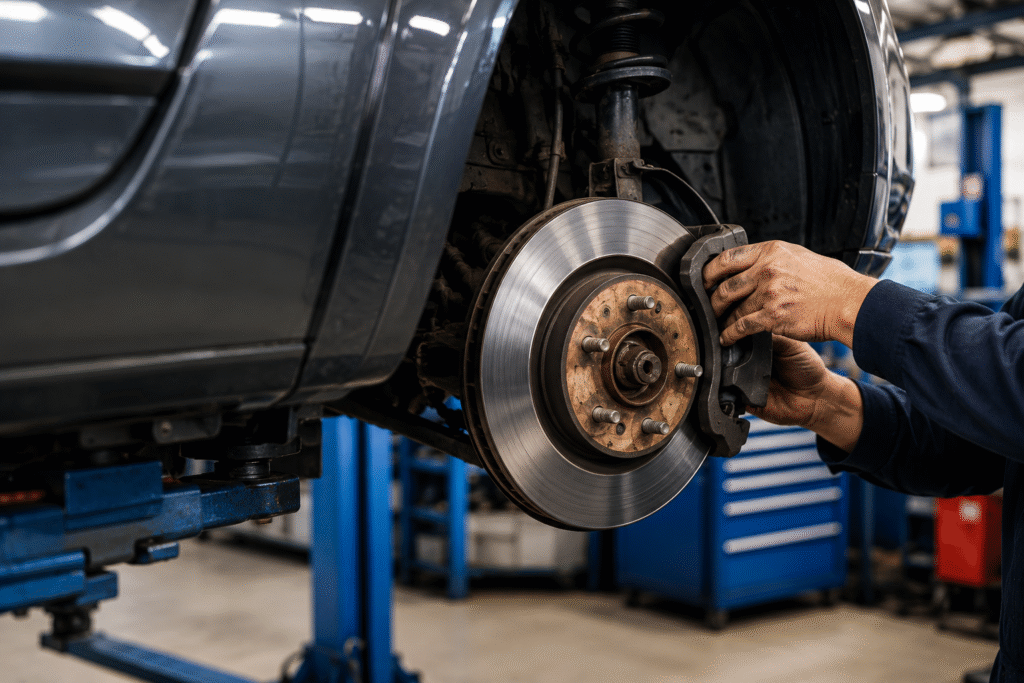
Brakes rarely fail out of nowhere. They wear down slowly and most drivers only notice once the car starts telling them in ways that are hard to ignore. A squeal here, a shudder there.
Brake issues show up more often in crash data than people expect. According to the National Highway Traffic Safety Administration brake problems were a factor in roughly 22% of crashes tied to vehicle defects. The good news is worn brakes usually give you warning before they become dangerous.
5 Warning Signs Your Brakes May Need Attention
Here are five signs our technicians at Supreme Lube see all the time at our Pickering and Etobicoke locations.
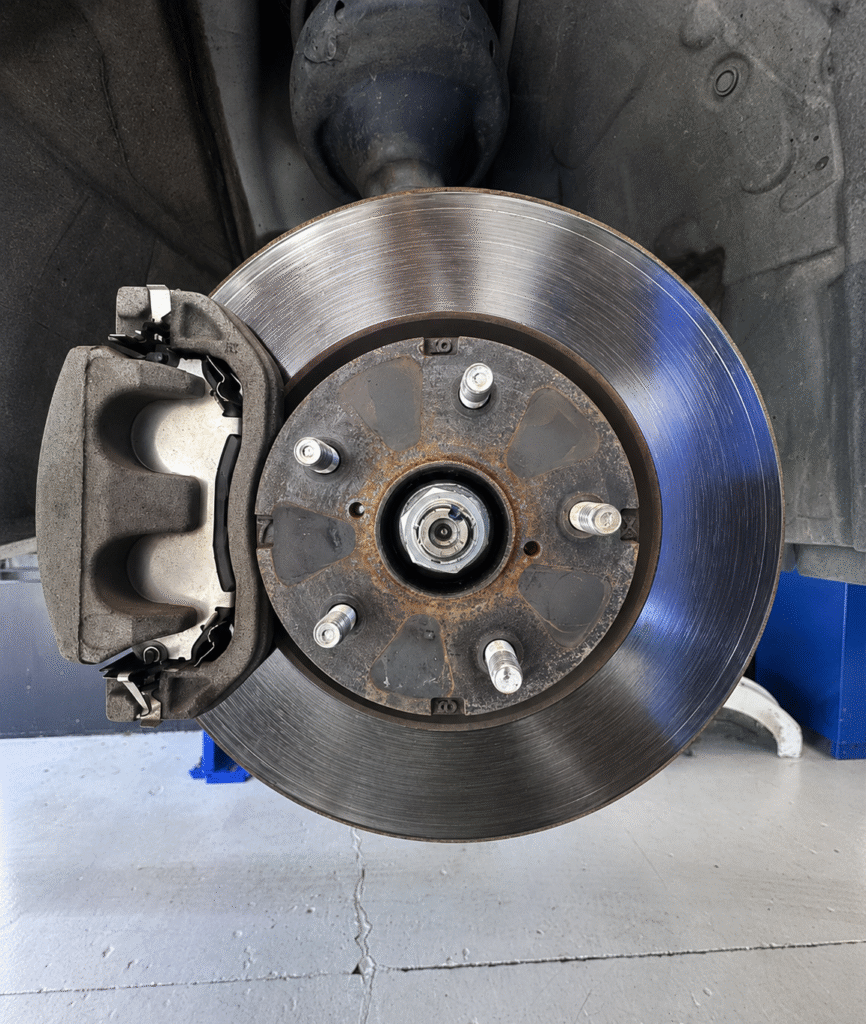
1. A Squeal That Shows Up When You Brake
That squeal isn’t your imagination. Many pads have a wear indicator, a tab that rubs against the rotor when the friction material wears down. It is designed to make noise so you notice before damage worsens.
If you hear it regularly, the pads are getting close to done. Not an emergency yet but not something to ignore either.
2. Grinding or a Sound Like Metal on Metal
Grinding is different. It is louder, harsher and usually means the pad material is gone and the backing plate is scraping against the rotor.
By this point, the rotor is often damaged as well. That is why a brake pads and rotors change often ends up being a package deal instead of replacing just the pads.
3. Shaking or Pulsing When You Slow Down
Feel a pulse through the brake pedal or a shimmy in the steering wheel while braking? That is usually a rotor issue.
Rotors can wear unevenly over time, especially with a lot of stop and go driving. Once the surface is no longer even, you feel it every time the brakes are applied.
It is easy to get used to. You should not.
4. Braking Feels Softer or Stopping Takes Longer
This one sneaks up on people.
Maybe the pedal travels further before it bites. Maybe the car just does not stop quite as confidently as it used to. Worn pads, worn rotors, or both can cause it.
Either way, it is worth getting checked.
5. You Can See Thin Pad Material Through the Wheel
On many vehicles, you can see the brake pads through the wheel spokes. A healthy pad still has visible friction material. If it looks paper thin or almost gone, that is a pretty good sign it is nearing replacement time.
A driveway check can give you an early warning but it will not tell you everything. Rotor thickness and uneven wear still need a proper inspection.
Why It Helps to Have a Trained Eye on It
Brake wear is not the same from one vehicle to the next. Driving habits, traffic conditions, parts quality and climate all play a role.
That is why our technicians check pad thickness, rotor condition and surrounding hardware whenever a vehicle comes in for brake work. If you are already due for an oil change or a tire check, it is a good time to have your brakes looked over as well.
Getting It Looked At
No appointment needed at either location. Walk in and our team will take a look, explain what they are seeing and let you decide from there.
Visit Supreme Lube in Pickering or Etobicoke. Whether you have noticed one of these signs already or you are just due for a check, it is worth getting ahead of it before a small issue turns into a bigger repair.
FAQs
How often do brake pads and rotors need changing?
It depends on how you drive. City driving tends to wear brakes faster than highway driving.
Do rotors always need replacing with the pads?
Not necessarily. If they are still within spec and wearing evenly, they may be reusable.
What happens if I keep driving on grinding brakes?
Rotor damage, longer stopping distances, and usually a bigger repair bill.
Do all four brakes need doing at once?
Usually not. Front and rear brakes often wear at different rates.
How long does a brake job take?
For most vehicles, about one to two hours per axle.