
Front-End Noise While Driving: Causes and Fixes

A clunk, a squeak and a low grinding hum that only shows up at certain speeds. Front end noise almost traces back to a handful of parts and the sound itself is usually the biggest clue to what is actually wrong. We hear this constantly at Supreme Lube, across our Pickering and Etobicoke bays and most of the time it comes down to one of six or seven usual suspects. Here is a straightforward breakdown of what those sounds mean and what tends to fix them along with a couple of causes most articles skip past entirely. What Front End Noise Usually Points To Front end noise while driving generally comes from one of four systems working together up there, your suspension, your steering, your brakes or your wheel bearings. Each one tends to produce a different kind of sound and paying attention to when the noise happens over bumps, while turning and braking or all the time narrows things down fast. Clunking or Knocking Over Bumps A clunk that only shows up when you hit a bump or a pothole commonly points to worn suspension components. Sway bar links plus worn bushings or a loose strut mount are common culprits and a worn tie rod end can produce a very similar sound. A full suspension inspection is really the only way to know which one is actually loose since several parts can cause this exact noise. Squeaking When Turning at Low Speed A squeak or creak while turning at low speed is often blamed on the power steering pump, but it is caused by a worn upper strut mount bearing. This part sits at the top of the strut and helps it turn smoothly. It can make a dry or scraping noise when it wears out or dries up. It is an inexpensive fix only if it is diagnosed correctly the first time. Grinding or Growling That Changes With Speed A grinding or growling noise that gets louder the faster you drive and does not change much with steering input and points to a worn wheel bearing. Bearings usually give some warning before they fail completely, so catching this early matters. On top of the noise, a bad bearing can eventually introduce play into the wheel itself which affects handling and in worse cases and safety. Clicking Sounds During Sharp Turns A rhythmic clicking that only shows up during a tight turn is a classic sign of a worn CV joint, not a steering or suspension issue at all. This gets mixed up with steering noise fairly often, since both happen while turning, but a CV joint click has a distinct rhythm tied to wheel rotation rather than the steering input itself. Whining or Groaning While Turning A whine that builds as you turn the wheel generally points to low power steering fluid or a pump nearing the end of its life. This one is worth checking before it turns into full loss of power assist as a pump that fails completely makes the car noticeably harder to steer. Vibration or Pulsing That Comes With Noise Sometimes front end noise shows up alongside a vibration and that combination usually narrows things down further. A noise paired with vibration under braking points toward the brake rotors. A noise paired with vibration at highway speed, without braking involved is more often a tire or wheel balance issue than anything in the suspension itself. Why These Sounds Are Worth Checking Sooner Rather Than Later Front end noise rarely goes away on its own and the components involved, steering, suspension, wheel bearings, all directly affect how your car handles and stops. A Safety Standards Certificate in Ontario specifically checks steering and suspension systems as part of what determines whether a vehicle meets the province’s minimum road safety requirements which says something about how seriously these components are treated. Catching a noise early is almost always a smaller repair than waiting for it to turn into a bigger one. Get Your Front End Noise Checked at Supreme Lube If your car is making a noise you cannot quite place, whether it is a clunk, a squeak, a grind or something in between, it is worth having someone actually listen and take a look rather than guessing. We offer walk in front end and suspension inspections with no appointment needed, at both our Pickering and Etobicoke locations. Learn more about our shop or get in touch with our team to have it looked at properly. FAQs Why does my car make noise over bumps but not on smooth roads? This points to a worn suspension part most often a sway bar link, bushing or strut mount, since these parts react to impact rather than to steady driving. Why does my car click when I turn sharply? A clicking sound during sharp turns is a common sign of a worn CV joint which is a separate issue from steering or suspension noise entirely. Is it safe to keep driving with front end noise? It depends on the sound and the cause. A minor squeak is not usually urgent, but a grinding noise or one paired with vibration should be checked soon, since it can point to a safety related part. Why does my steering make a whining noise? This usually means low power steering fluid or a pump that is starting to wear out and it is worth checking before the noise turns into a loss of power assist. How much does front end noise diagnosis usually cost? It depends on the shop and the vehicle, since diagnosis time varies with how many systems need to be checked. A proper inspection is the only reliable way to get an accurate answer.
Shocks vs. Struts: Understanding the Difference
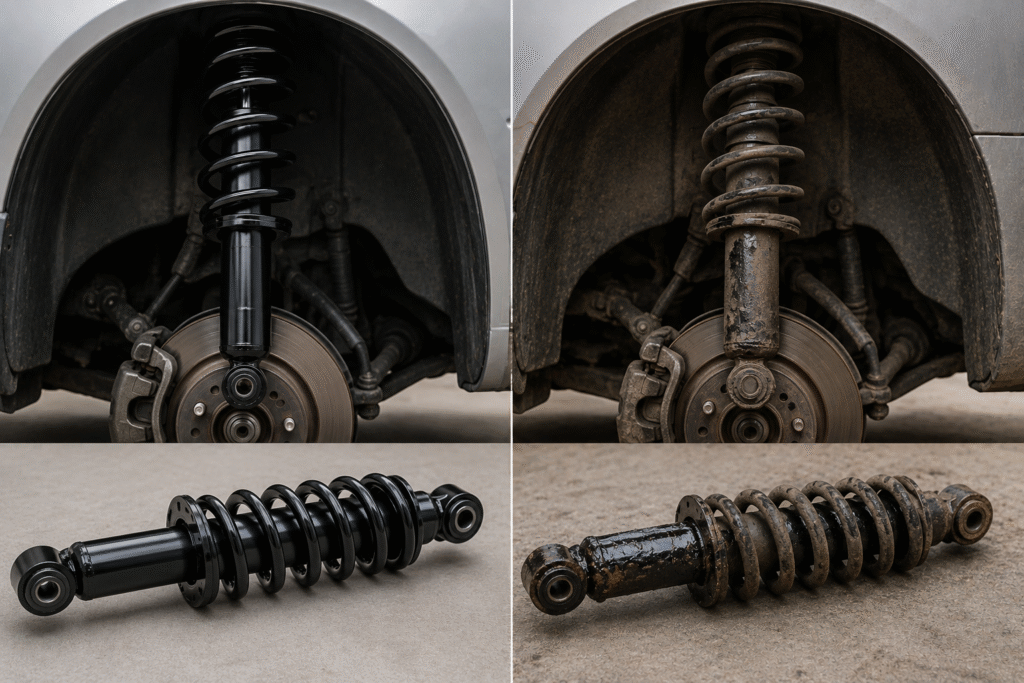
Shocks and struts get talked about like they are the same part, but they are not. A shock is a standalone piece that only controls motion. A strut does that same job while also holding up part of the vehicle’s weight, since the coil spring is built right into it. That difference changes how each one gets diagnosed and it changes the price too. We sort out which one a car actually has and which one is worn every week across our Pickering and Etobicoke bays. Here is the plain version of what each part does and how to tell them apart including on a couple of things most guides never mention. What a Shock Absorber Actually Does A shock controls the speed at which your springs compress and rebound after a bump. A piston pushes against hydraulic fluid inside it. That resistance slows the spring down so the car settles instead of bouncing frequently. Shocks mount on their own between the frame and a control arm or axle and they carry no weight themselves. Their only job is managing motion. What a Strut Actually Does A strut does everything a shock does, but it is also a structural part of the suspension. The coil spring wraps directly around it and the whole unit generally replaces the upper control arm. This you would find in a more traditional setup. That makes struts weight bearing and it also means they help hold the wheel in position as it turns, which is why replacing one usually calls for an alignment check right after. Shocks vs Struts at a Glance Feature Shocks Struts Carries vehicle weight No Yes Includes the coil spring No, mounted separately Yes, built into the unit Affects wheel alignment Rarely Yes Typical location Rear axle on most cars Front axle on most cars Replacement tools needed Basic hand tools Spring compressor required Signs Either One Is Wearing Out A car that keeps bouncing after a bump instead of settling quickly is the classic symptom, whether the part in question is a shock or a strut. Nose diving hard under braking usually points to the front struts specifically as they control how much the front end dips. Uneven or cupped tire wear is another clue, since a tire that keeps bouncing off the road wears unevenly instead of flat. A fluid leak on the body of the shock or strut means the seal has failed and it needs to be replaced. Clunking over bumps is worth listening for too, though that noise can also come from the mount or bushing around the part rather than the part itself. The Symptom Most Drivers Miss Most articles stop at bouncing and leaking, but a slower kind of wear shows up first and gets ignored constantly. Struts in particular tend to lose their damping gradually long before any fluid leak appears. This means the car just starts to feel a little floatier in corners or a touch less planted at highway speed. Drivers get used to it because it happens slowly and by the time it feels obviously wrong, the wear is already significant. This is really the reason we check shocks and struts as part of a routine suspension inspection rather than waiting for a complaint, since the gradual version of this problem rarely announces itself the way a leak does. Do You Have Shocks or Struts on Your Car It depends on the vehicle. Most front wheel drive cars use struts up front and shocks in the rear and some use struts on all four corners. It is uncommon, though not unheard of to find a vehicle built with shocks only. If you are not sure which your car has, a quick look during a suspension inspection will tell you exactly what is under there and whether it needs attention. Why the Difference Affects Your Repair Bill Struts generally cost more to replace than shocks and the labor is the main reason why. A shock can often be unbolted and swapped without much extra work. A strut assembly needs the coil spring compressed and released safely. This takes specialized tools and more time on the lift. That is also why comparing quotes between shops only makes sense once you know which part is actually being discussed, since a quote for shocks and a quote for struts are rarely the same thing. Keeping an Eye on This Over Time Suspension wear is one of those things Transport Canada lists as part of routine vehicle upkeep that supports safe driving overall and it holds up here specifically since worn shocks or struts reduce how well your tires stay planted during braking and cornering. Catching the gradual kind of wear early, before a leak or a clunk shows up and tends to be the cheaper and simpler path. Getting Them Fixed at Supreme Lube We walk customers through exactly what we find during a suspension check and we explain whether one side needs attention or both as that changes the cost. You can learn more about our shop or reach out to our team if your ride feels bouncier, looser or less stable than it used to at both our Pickering and Etobicoke locations. FAQs Are shocks and struts the same thing? No. A strut includes a spring and carries the vehicle’s weight whereas a shock is a separate damping part that does not support weight at all. Do shocks and struts need to be replaced at the same time? Not always. They are done in pairs on the same axle as one side being worn often means the other is not far behind. How do I know if my car has shocks or struts? It comes down to the make and model. Most front wheel drive vehicles run struts up front and shocks in the rear, though some use struts on all four corners. If I can only replace one side right now which should I prioritize? Whichever end shows the clearer
How Do You Know If Your Shocks Are Damaged or Just Worn Out?
Every driver notices a bumpier ride sooner or later and the question that follows is almost always the same. Is this normal wear or is something actually damaged? Knowing the difference matters because it decides whether your car needs routine attention or a closer look right away. Your worn shocks or damaged shocks affect more than comfort. They influence tire life or braking control and how confidently your car handles the road. What Worn Shocks Feel Like Wear happens gradually so slowly that drivers adjust to it without noticing. Common signs include: This kind of change builds up over tens of thousands of kilometres and is a normal part of a vehicle aging. It will not necessarily point to a problem needing immediate correction but it is worth having checked during a routine visit. What Damaged Shocks Look and Feel Like Damage is more likely to show up suddenly rather than slowly after hitting a deep pothole and curb or rough patch of road. Signs to watch for include: If any of these show up, it is a good idea to have the suspension looked at sooner rather than later, since damage does not improve on its own. Why This Difference Matters Wear is something you plan around. Damage is something you address promptly. Knowing which one you are dealing with helps you make an informed decision instead of guessing. Our team regularly walks customers through this exact distinction as part of our suspension services, explaining what we see and why so you understand the condition of your vehicle before any work begins. How Tire Wear Can Point Back to Your Suspension Shocks and struts help to keep your tires in steady contact with the road. Tires can develop cupping or scalloped patterns when they lose that control and that show up long before the ride itself feels off. It is worth mentioning to your technician if you have noticed uneven wear during a recent tire service as tire condition and suspension health are closely connected. The National Highway Traffic Safety Administration notes that tire condition plays a direct role in vehicle handling and overall safety which is part of why routine inspection matters. A Simple Way to Check at Home Press down firmly on one corner of your car and release it. A healthy suspension should settle after one gentle rebound. If it continues bouncing that corner may be worth a closer look. This test is a helpful starting point not a full diagnosis and it works best alongside a proper inspection. Why Drivers Trust Supreme Lube With This Suspension issues are not always easy to judge from the driver’s seat which is exactly why an experienced eye matters. At Supreme Lube, our technicians inspect shocks and struts or related suspension components with the same honest and no pressure approach we bring to every service along with explaining what is wear or what is damage and what can simply be monitored. Get Your Suspension Checked at Supreme Lube If your ride has started to feel different, do not wait for it to become a bigger question. Visit Supreme Lube in Pickering or Etobicoke for a straightforward suspension inspection. No appointment needed just honest advice from a team that treats your vehicle like their own. Contact us today or stop by for a walk in visit. FAQs How do I know if it is my shocks or just worn tires causing the bounce? A bounce test and a visual inspection tell the two apart as tire wear follows a pattern caused by the suspension rather than the other way around. Can I keep driving with damaged shocks for a while? It is possible in the short term but handling and stopping control may be reduced so having it inspected soon is a good idea. What is a quick way to test my shocks at home? Press down on a corner of the car and let go. One smooth rebound is normal but repeated bouncing suggests it is time for a check. Are shocks and struts the same part? They are related but not same. Struts combine a shock absorber with a structural suspension component while shocks are a standalone part in many vehicles. How should shocks be inspected? Most vehicles benefit from a suspension check during regular maintenance visits, especially after 60,000 kilometres or any noticeable change in ride quality.
5 Signs Your Brake Pads and Rotors Need Replacing Right Now
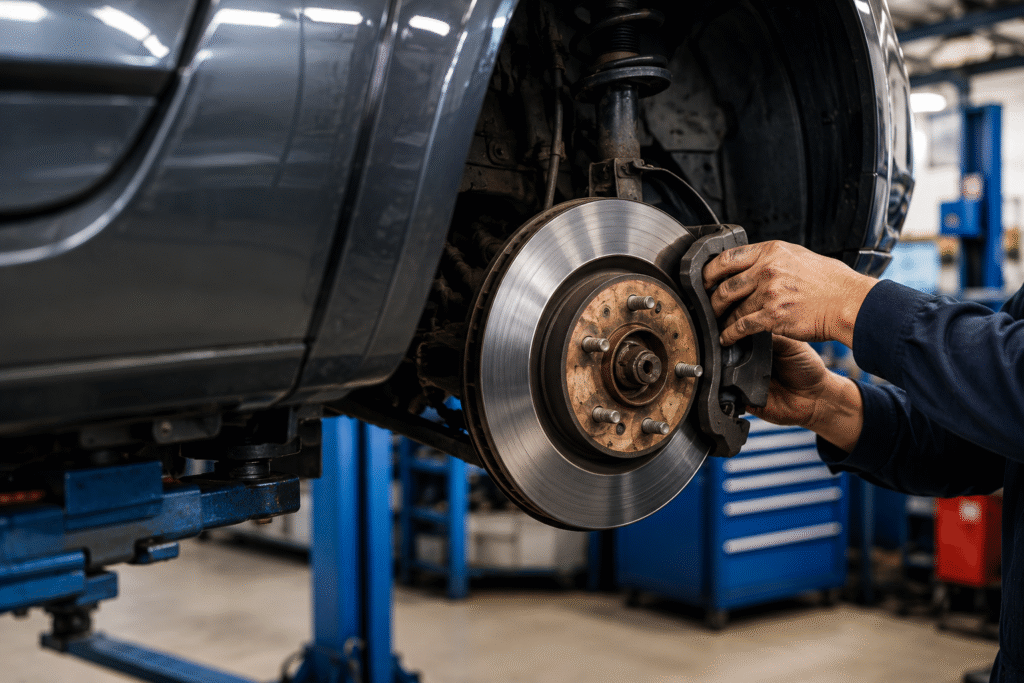
Brakes rarely fail out of nowhere. They wear down slowly and most drivers only notice once the car starts telling them in ways that are hard to ignore. A squeal here, a shudder there. Brake issues show up more often in crash data than people expect. According to the National Highway Traffic Safety Administration brake problems were a factor in roughly 22% of crashes tied to vehicle defects. The good news is worn brakes usually give you warning before they become dangerous. 5 Warning Signs Your Brakes May Need Attention Here are five signs our technicians at Supreme Lube see all the time at our Pickering and Etobicoke locations. 1. A Squeal That Shows Up When You Brake That squeal isn’t your imagination. Many pads have a wear indicator, a tab that rubs against the rotor when the friction material wears down. It is designed to make noise so you notice before damage worsens. If you hear it regularly, the pads are getting close to done. Not an emergency yet but not something to ignore either. 2. Grinding or a Sound Like Metal on Metal Grinding is different. It is louder, harsher and usually means the pad material is gone and the backing plate is scraping against the rotor. By this point, the rotor is often damaged as well. That is why a brake pads and rotors change often ends up being a package deal instead of replacing just the pads. 3. Shaking or Pulsing When You Slow Down Feel a pulse through the brake pedal or a shimmy in the steering wheel while braking? That is usually a rotor issue. Rotors can wear unevenly over time, especially with a lot of stop and go driving. Once the surface is no longer even, you feel it every time the brakes are applied. It is easy to get used to. You should not. 4. Braking Feels Softer or Stopping Takes Longer This one sneaks up on people. Maybe the pedal travels further before it bites. Maybe the car just does not stop quite as confidently as it used to. Worn pads, worn rotors, or both can cause it. Either way, it is worth getting checked. 5. You Can See Thin Pad Material Through the Wheel On many vehicles, you can see the brake pads through the wheel spokes. A healthy pad still has visible friction material. If it looks paper thin or almost gone, that is a pretty good sign it is nearing replacement time. A driveway check can give you an early warning but it will not tell you everything. Rotor thickness and uneven wear still need a proper inspection. Why It Helps to Have a Trained Eye on It Brake wear is not the same from one vehicle to the next. Driving habits, traffic conditions, parts quality and climate all play a role. That is why our technicians check pad thickness, rotor condition and surrounding hardware whenever a vehicle comes in for brake work. If you are already due for an oil change or a tire check, it is a good time to have your brakes looked over as well. Getting It Looked At No appointment needed at either location. Walk in and our team will take a look, explain what they are seeing and let you decide from there. Visit Supreme Lube in Pickering or Etobicoke. Whether you have noticed one of these signs already or you are just due for a check, it is worth getting ahead of it before a small issue turns into a bigger repair. FAQs How often do brake pads and rotors need changing? It depends on how you drive. City driving tends to wear brakes faster than highway driving. Do rotors always need replacing with the pads? Not necessarily. If they are still within spec and wearing evenly, they may be reusable. What happens if I keep driving on grinding brakes? Rotor damage, longer stopping distances, and usually a bigger repair bill. Do all four brakes need doing at once? Usually not. Front and rear brakes often wear at different rates. How long does a brake job take? For most vehicles, about one to two hours per axle.