
Every driver notices a bumpier ride sooner or later and the question that follows is almost always the same. Is this normal wear or is something actually damaged? Knowing the difference matters because it decides whether your car needs routine attention or a closer look right away. Your worn shocks or damaged shocks affect more than comfort. They influence tire life or braking control and how confidently your car handles the road.
What Worn Shocks Feel Like
Wear happens gradually so slowly that drivers adjust to it without noticing. Common signs include:
- A soft, bouncy feeling after speed bumps or dips
- A ride that feels less controlled than it used to
- Slightly longer nose dive when braking
- Gradual, uneven tread wear developing on the tires
This kind of change builds up over tens of thousands of kilometres and is a normal part of a vehicle aging. It will not necessarily point to a problem needing immediate correction but it is worth having checked during a routine visit.
What Damaged Shocks Look and Feel Like
Damage is more likely to show up suddenly rather than slowly after hitting a deep pothole and curb or rough patch of road. Signs to watch for include:
- A sharp clunking or knocking sound over bumps
- Visible fluid seeping from the shock body
- The vehicle sitting noticeably lower on one side
- A harsh, jarring impact even over small bumps
If any of these show up, it is a good idea to have the suspension looked at sooner rather than later, since damage does not improve on its own.
Why This Difference Matters
Wear is something you plan around. Damage is something you address promptly. Knowing which one you are dealing with helps you make an informed decision instead of guessing. Our team regularly walks customers through this exact distinction as part of our suspension services, explaining what we see and why so you understand the condition of your vehicle before any work begins.
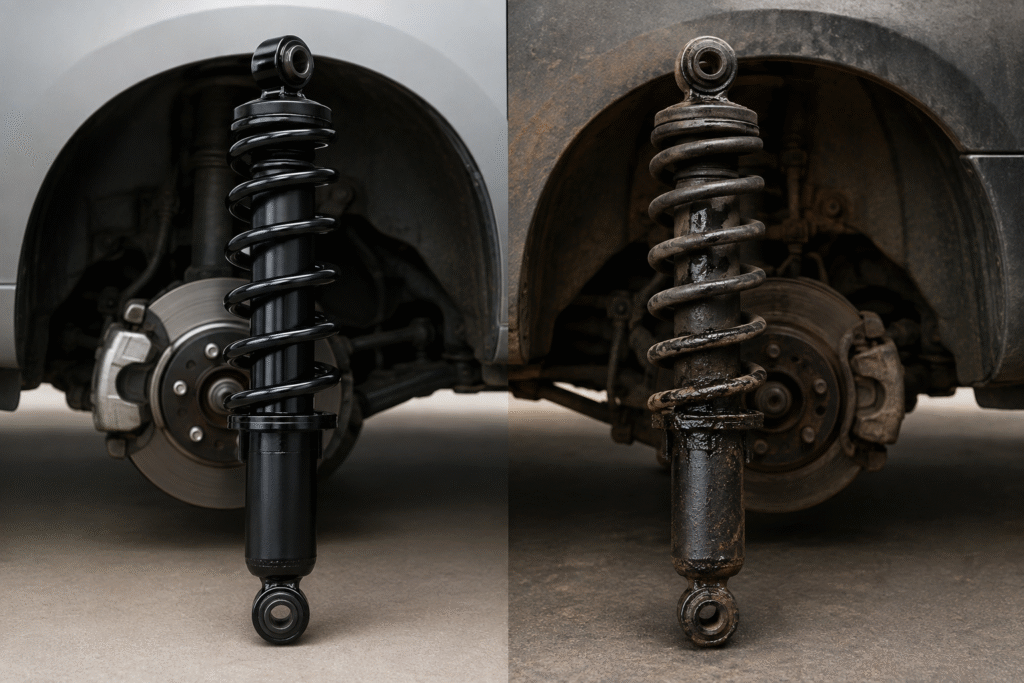
How Tire Wear Can Point Back to Your Suspension
Shocks and struts help to keep your tires in steady contact with the road. Tires can develop cupping or scalloped patterns when they lose that control and that show up long before the ride itself feels off.
It is worth mentioning to your technician if you have noticed uneven wear during a recent tire service as tire condition and suspension health are closely connected. The National Highway Traffic Safety Administration notes that tire condition plays a direct role in vehicle handling and overall safety which is part of why routine inspection matters.
A Simple Way to Check at Home
Press down firmly on one corner of your car and release it. A healthy suspension should settle after one gentle rebound. If it continues bouncing that corner may be worth a closer look. This test is a helpful starting point not a full diagnosis and it works best alongside a proper inspection.
Why Drivers Trust Supreme Lube With This
Suspension issues are not always easy to judge from the driver’s seat which is exactly why an experienced eye matters. At Supreme Lube, our technicians inspect shocks and struts or related suspension components with the same honest and no pressure approach we bring to every service along with explaining what is wear or what is damage and what can simply be monitored.
Get Your Suspension Checked at Supreme Lube
If your ride has started to feel different, do not wait for it to become a bigger question. Visit Supreme Lube in Pickering or Etobicoke for a straightforward suspension inspection. No appointment needed just honest advice from a team that treats your vehicle like their own. Contact us today or stop by for a walk in visit.
FAQs
How do I know if it is my shocks or just worn tires causing the bounce?
A bounce test and a visual inspection tell the two apart as tire wear follows a pattern caused by the suspension rather than the other way around.
Can I keep driving with damaged shocks for a while?
It is possible in the short term but handling and stopping control may be reduced so having it inspected soon is a good idea.
What is a quick way to test my shocks at home?
Press down on a corner of the car and let go. One smooth rebound is normal but repeated bouncing suggests it is time for a check.
Are shocks and struts the same part?
They are related but not same. Struts combine a shock absorber with a structural suspension component while shocks are a standalone part in many vehicles.
How should shocks be inspected?
Most vehicles benefit from a suspension check during regular maintenance visits, especially after 60,000 kilometres or any noticeable change in ride quality.