
Wheel Alignment vs. Wheel Balancing: What’s the Difference?
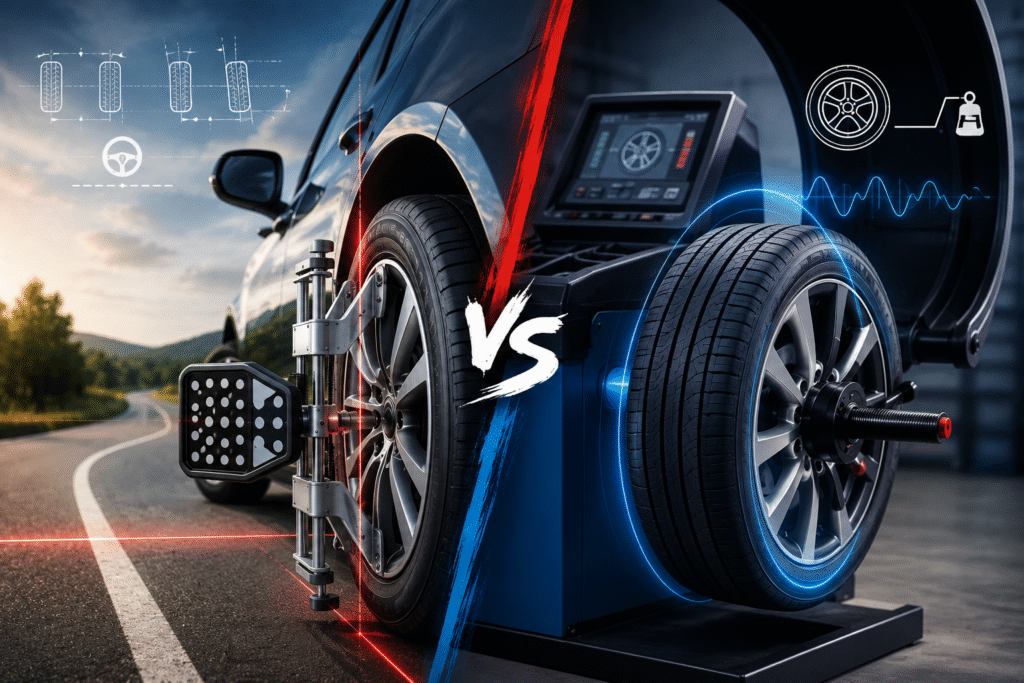
Wheel alignment and wheel balancing are two different tire services that fix different problems. Alignment adjusts the angle of your wheels so the car can drive straight. Balancing adjusts weight around the wheel to make it spin smoothly at high speeds. People mix the two up since both affect ride quality but knowing which one your car needs saves you time and an unnecessary visit. At Supreme Lube, our technicians handle both services for drivers across Pickering and Etobicoke, often during the same visit. Here is a simple breakdown of what each one does and how to tell them apart. What Is Wheel Alignment Wheel alignment adjusts the angles of your wheels so they point in the direction the manufacturer intended. Three angles matter most: camber, toe and caster. Each affects how your tires meet the road. You likely need an alignment if you notice: Alignment can be affected by potholes and curbs and also by other road impacts. Worn or damaged suspension and steering components can also change the vehicle’s wheel angles. What Is Wheel Balancing Balanced wheel helps in correcting uneven weight distribution around a tire and wheel assembly. Every tire has tiny variations in weight which get added to the rim to even things out. Without balancing the wheel spins unevenly at speed. Signs your wheels need balancing include: Balancing issues comes after installing new tires or after a wheel loses its weight. Wheel Alignment vs. Wheel Balancing: The Key Differences Alignment and balancing address two separate parts of how your car drives and mixing them up is a common source of confusion. Aspect Wheel Alignment Wheel Balancing What it fixes Wheel angles and direction Uneven weight around the wheel What it feels like Car pulls or drifts to one side Vibration, especially at higher speeds Where the vibration shows up Not typically a symptom Steering wheel, seat or floor Tire wear pattern Wear on the inner or outer edge Cupped or scalloped wear When it is needed When symptoms appear after significant impacts or as recommended by the vehicle manufacturer With new tire installation or when vibration develops What it protects Tire wear patterns and steering precision Ride comfort and suspension components Getting one without the other will not solve a problem caused by the other which is why a full tire service visit typically checks both. Why Both Matter for Tire Life and Fuel Use Beyond comfort, alignment and balancing both affect how efficiently your car runs. Natural Resources Canada notes that fuel efficient driving habits paired with proper vehicle maintenance reduce fuel consumption and prevent unnecessary wear on your vehicle. Tires that roll straight and spin evenly meet less resistance so your engine works less to maintain speed. Skipping either service also shortens tire life which means replacing tires sooner than necessary. Wheel Alignment Cost and Wheel Balancing Cost Wheel alignment cost and wheel balancing cost depend on your vehicle, the type of alignment needed and whether all four wheels or just the front pair require adjustment. Balancing is generally the more affordable of the two services, since it involves fewer moving parts and less labor time. Alignment can cost more, particularly on vehicles that need adjustable aftermarket parts installed first. For an accurate quote on your specific vehicle, an in person inspection is the most reliable way to get pricing you can count on. How Often Should You Get Alignment and Balancing Done It is a good idea to have your alignment checked periodically and after hitting a significant pothole or curb. Some drivers may also benefit from an annual check depending on their vehicle, driving conditions and tire wear. Balancing should be checked whenever you install new tires and rechecked if you notice vibration at speed. Rotating your tires regularly is also a good time to have both checked, since the same visit can catch early wear before it becomes a bigger repair. Get Your Wheels Checked at Supreme Lube It is worth getting both alignment and balancing checked rather than guessing which one is the culprit if your car pulls to one side or your steering wheel vibrates on the highway. Our team at Supreme Lube offers walk in service with no appointment needed at both our Pickering and Etobicoke locations. Learn more about our shop or get in touch with our team to get your wheels back on track. FAQs Can a wheel be balanced but still out of alignment? Yes. A wheel can spin perfectly smooth while still pulling the car off center because balancing and alignment are separate adjustments. How do I know if I need an alignment or a balance? Pulling or drifting points to alignment. Vibration, especially at highway speed, points to balancing. Sometimes a car needs both. Does wheel balancing fix a car that pulls to one side? No. Balancing only addresses vibration from uneven weight. Pulling is an alignment issue and needs to be corrected separately. How long does an alignment or balance take? Timing depends on your vehicle and how much adjustment is needed. Both are typically completed within an hour. Do new tires always need balancing? Yes. New tires should be balanced during installation. Even small weight differences can cause vibration once the tire is on the road.
Why Your Car Pulls to One Side While Driving
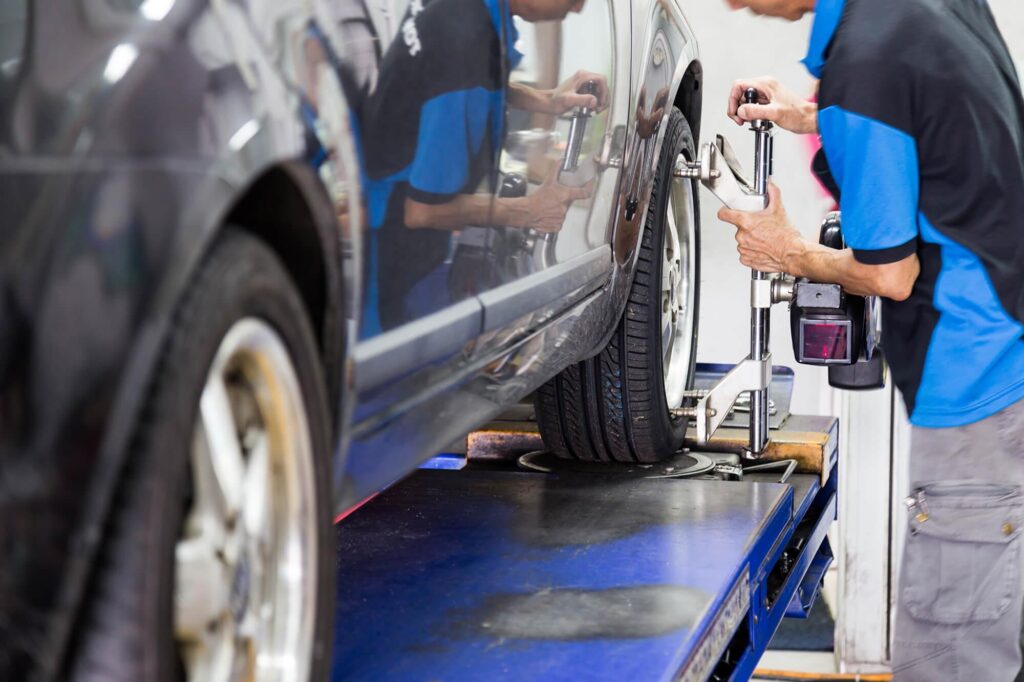
Most drivers can tell within seconds when something is off with their steering. The wheel needs constant correction, one hand has to hold a slight counter turn just to keep the car centered. A car pulling to one side is one of the more noticeable handling problems a vehicle can develop. Understanding what typically causes it makes it easier to know when a visit to a technician is worth prioritizing. Common Reasons a Car Pulls to One Side This symptom can be traced back to one of five areas and in some cases more than one is involved at once. Tire pressure imbalance – It creates more rolling resistance on that side of the vehicle when one tire holds noticeably less air than the others. That imbalance pulls the steering toward it and the effect becomes harder to ignore the faster you drive. Wheel alignment issues – A hard hit from a pothole or an accidental curb bump can throw off a vehicle’s alignment without any dramatic warning sign. Even a small shift away from the manufacturer’s specification is enough to produce a pull that stays consistent no matter how far you drive. Staying ahead of alignment along with routine tire service, does more than resolve a pull. It also protects the tires themselves from wearing down faster than they should. Uneven tire wear – Tires that wear down unevenly stop making the same contact with the road on both sides whether from age or missed rotations and an alignment issue that has gone unaddressed. That inconsistency shows up as a pull that can be subtle at first and more noticeable over time. Brake drag – A caliper that does not fully release keeps steady and partial pressure on one wheel. Since the resistance is tied directly to the braking system this kind of pull tends to stand out most when the brakes are applied. Suspension wear – Bushings, ball joints and struts all play a role in how each wheel meets the road. As these parts wear down, the vehicle gradually loses the balance it needs to hold a straight line. Why This Is Worth Addressing Early A pull to one side is rarely just a comfort issue. Left unresolved, most of the causes behind it continue to get worse the longer they go unchecked. Misalignment accelerates tire wear on whichever side is affected which shortens the life of a set of tires that would otherwise last much longer. The National Highway Traffic Safety Administration’s TireWise program notes that proper alignment helps keep a vehicle from veering to one side on a straight, level road and it also helps tires last longer. A dragging brake caliper can generate excess heat over time, which affects how that brake performs. And a suspension component that is starting to wear rarely improves on its own, it simply continues wearing until it needs replacement anyway. None of this means a pull is an emergency. It means the earlier it gets looked at the more likely the fix stays simple. Signs You Should Not Ignore A pull to one side rarely shows up completely alone. A few other signs tend to travel with it and noticing them early can help narrow down the cause before a technician even takes a look. One of these on its own is worth mentioning at your next visit. A few of them together are a good reason to schedule an inspection sooner. Get It Checked at Supreme Lube A car pulling to one side is almost always fixable once the actual cause is confirmed and catching it early tends to keep both the repair and the cost from growing into something bigger. At Supreme Lube, that process starts with the basics, tire pressure and tread wear, since we are the fastest to check and the easiest to fix. If your vehicle has started doing this, the team at Supreme Lube is ready to take a look. Visit our Pickering or Etobicoke location, no appointment needed or reach out to us with any questions before you come in. FAQs Why does my car pull to one side only when I brake? That points to a brake related issue, most a caliper on one wheel that is not releasing evenly. Since the resistance only shows up during braking, the pull disappears the moment you let off the pedal. Can low tire pressure alone cause a car to pull to one side? It can. A meaningful pressure difference between two tires on the same axle is enough on its own. It is also the quickest thing to rule out, since checking it takes only a few minutes with a gauge. Is it safe to keep driving if my car pulls slightly to one side? For a short trip, yes. But the cause behind it tends to get worse the longer it is ignored or wearing tires unevenly and putting extra strain on related parts so it is worth having checked sooner rather than later. How do I know if it is alignment or suspension causing the pull? Alignment issues create a steady pull that stays consistent. Suspension wear tends to bring along other symptoms too, like vibration or a rougher ride. A short inspection is generally enough to tell the two apart.