
Wheel alignment and wheel balancing are two different tire services that fix different problems.
Alignment adjusts the angle of your wheels so the car can drive straight. Balancing adjusts weight around the wheel to make it spin smoothly at high speeds. People mix the two up since both affect ride quality but knowing which one your car needs saves you time and an unnecessary visit.
At Supreme Lube, our technicians handle both services for drivers across Pickering and Etobicoke, often during the same visit. Here is a simple breakdown of what each one does and how to tell them apart.
What Is Wheel Alignment
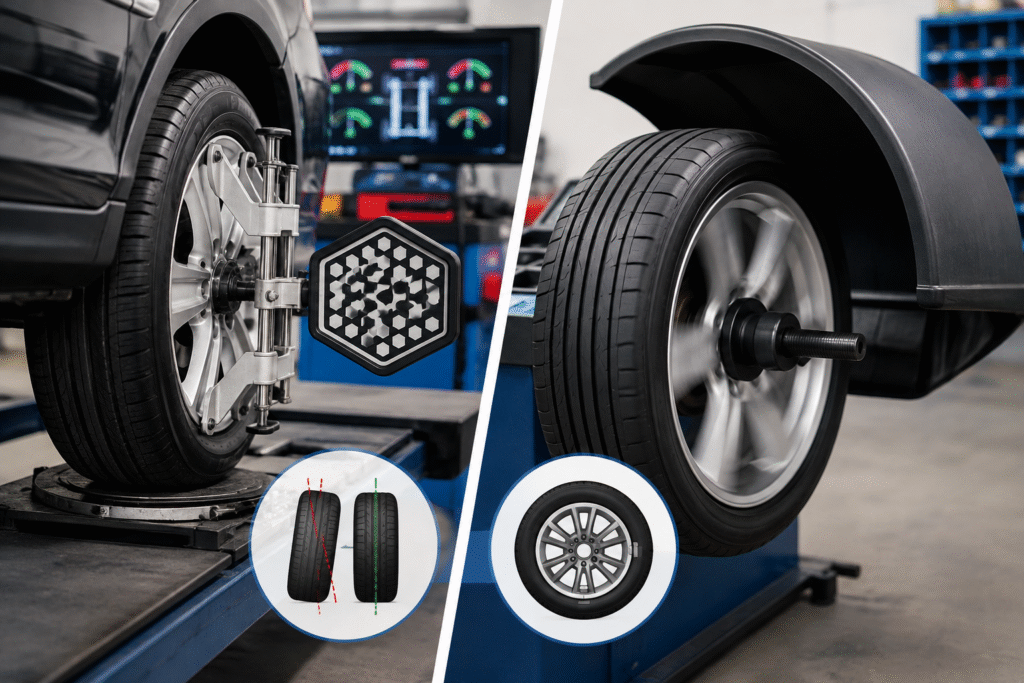
Wheel alignment adjusts the angles of your wheels so they point in the direction the manufacturer intended. Three angles matter most: camber, toe and caster. Each affects how your tires meet the road.
You likely need an alignment if you notice:
- Pulling to one side while driving on a flat and straight road
- Uneven tire wear on the inner or outer edge of the tread
- An off center steering wheel even when driving straight
- Steering that feels loose or slow to respond
Alignment can be affected by potholes and curbs and also by other road impacts. Worn or damaged suspension and steering components can also change the vehicle’s wheel angles.
What Is Wheel Balancing
Balanced wheel helps in correcting uneven weight distribution around a tire and wheel assembly. Every tire has tiny variations in weight which get added to the rim to even things out. Without balancing the wheel spins unevenly at speed.
Signs your wheels need balancing include:
- Vibration in the steering wheel usually starting around highway speed
- Vibration felt in the seat or floor rather than the steering wheel
- Cupped or scalloped tire wear in a repeating pattern around the tread
Balancing issues comes after installing new tires or after a wheel loses its weight.
Wheel Alignment vs. Wheel Balancing: The Key Differences
Alignment and balancing address two separate parts of how your car drives and mixing them up is a common source of confusion.
| Aspect | Wheel Alignment | Wheel Balancing |
| What it fixes | Wheel angles and direction | Uneven weight around the wheel |
| What it feels like | Car pulls or drifts to one side | Vibration, especially at higher speeds |
| Where the vibration shows up | Not typically a symptom | Steering wheel, seat or floor |
| Tire wear pattern | Wear on the inner or outer edge | Cupped or scalloped wear |
| When it is needed | When symptoms appear after significant impacts or as recommended by the vehicle manufacturer | With new tire installation or when vibration develops |
| What it protects | Tire wear patterns and steering precision | Ride comfort and suspension components |
Getting one without the other will not solve a problem caused by the other which is why a full tire service visit typically checks both.
Why Both Matter for Tire Life and Fuel Use
Beyond comfort, alignment and balancing both affect how efficiently your car runs. Natural Resources Canada notes that fuel efficient driving habits paired with proper vehicle maintenance reduce fuel consumption and prevent unnecessary wear on your vehicle. Tires that roll straight and spin evenly meet less resistance so your engine works less to maintain speed. Skipping either service also shortens tire life which means replacing tires sooner than necessary.
Wheel Alignment Cost and Wheel Balancing Cost
Wheel alignment cost and wheel balancing cost depend on your vehicle, the type of alignment needed and whether all four wheels or just the front pair require adjustment. Balancing is generally the more affordable of the two services, since it involves fewer moving parts and less labor time. Alignment can cost more, particularly on vehicles that need adjustable aftermarket parts installed first. For an accurate quote on your specific vehicle, an in person inspection is the most reliable way to get pricing you can count on.
How Often Should You Get Alignment and Balancing Done
It is a good idea to have your alignment checked periodically and after hitting a significant pothole or curb. Some drivers may also benefit from an annual check depending on their vehicle, driving conditions and tire wear.
Balancing should be checked whenever you install new tires and rechecked if you notice vibration at speed. Rotating your tires regularly is also a good time to have both checked, since the same visit can catch early wear before it becomes a bigger repair.
Get Your Wheels Checked at Supreme Lube
It is worth getting both alignment and balancing checked rather than guessing which one is the culprit if your car pulls to one side or your steering wheel vibrates on the highway. Our team at Supreme Lube offers walk in service with no appointment needed at both our Pickering and Etobicoke locations. Learn more about our shop or get in touch with our team to get your wheels back on track.
FAQs
Can a wheel be balanced but still out of alignment?
Yes. A wheel can spin perfectly smooth while still pulling the car off center because balancing and alignment are separate adjustments.
How do I know if I need an alignment or a balance?
Pulling or drifting points to alignment. Vibration, especially at highway speed, points to balancing. Sometimes a car needs both.
Does wheel balancing fix a car that pulls to one side?
No. Balancing only addresses vibration from uneven weight. Pulling is an alignment issue and needs to be corrected separately.
How long does an alignment or balance take?
Timing depends on your vehicle and how much adjustment is needed. Both are typically completed within an hour.
Do new tires always need balancing?
Yes. New tires should be balanced during installation. Even small weight differences can cause vibration once the tire is on the road.