
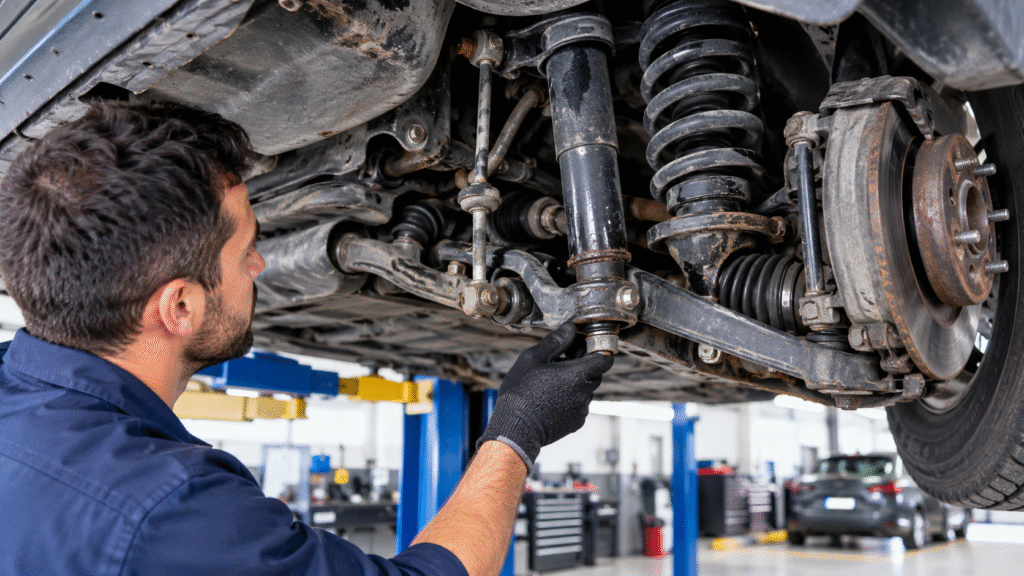
Car suspension keeps the ride smooth and tires gripping the road and predictable steering over bumps when turns. It is built from shocks and struts along with springs, control arms or ball joints and bushings working together to absorb impact. When one part wears out you feel it every time you drive.
At Supreme Lube, our technicians inspect and repair suspension systems for drivers across Pickering and Etobicoke every week and the same handful of problems show up again and again. Below is a plain guide to the most common suspension problems in cars with reasons for causing them and solutions.
Common Suspension Problems in Cars
A worn suspension affects braking distance and tire wear along with how your car handles in a sudden stop or lane change. Transport Canada lists regular vehicle upkeep as a core part of safe driving and suspension health is a big part of that since it keeps your tires in contact with the road.
Catching issues early also costs less. A worn bushing or a leaking strut is a simple fix but left alone it can damage tires or throw off your alignment.
Worn Shocks and Struts
Shocks and struts control how your car absorbs bumps and settles after them. When they wear out, you will notice:
- Excessive bouncing after bumps or railroad tracks instead of settling quickly
- Nose diving when braking where the front of the car dips sharply
- Fluid leaks visible on the outside of the shock or strut body
- Uneven or cupped tire wear from the tire bouncing instead of staying flat
Wear happens gradually and many drivers do not notice the change until it is significant. The fix is a straightforward replacement done in pairs on the same axle so your car handles evenly on both sides.
Bad Ball Joints
Ball joints connect the steering knuckle to the control arms and let your wheels pivot when you steer. Worn ball joints produce:
- Clunking or knocking noises from the front end especially over bumps
- A loose or wandering feeling in the steering
- Uneven tire wear on the inner or outer edge
Ball joints are a safety critical part and a complete failure can cause a sudden loss of steering control. Repair involves replacing the worn ball joint or the full control arm assembly if the joint is built into it, followed by an alignment check.
Worn Control Arm Bushings
Bushings are the rubber or polyurethane cushions that let control arms move without metal grinding on metal. Over time they crack, dry out or separate causing clunking during turns and vague steering or visible cracking on inspection.
They deteriorate with age even on low mileage vehicles making this a common suspension issue on older cars that otherwise run fine. Fixing it means replacing the bushing or the full control arm depending on how the part is designed.
Broken or Sagging Springs
Coil springs support the weight of your vehicle and help maintain ride height. A broken or weakened spring can cause one corner of the car to sit lower resulting in a harsh and jarring ride or uneven handling when cornering. Springs can last the life of a vehicle under normal conditions but potholes or heavy loads and rough roads can cause them to sag or snap early. Replacement is done in pairs to keep the vehicle level and stable.
Failing Sway Bar Links and Bushings
The sway bar also called an anti roll bar reduces body lean when you corner. Worn links or bushings typically show up as rattling or clunking over small bumps, increased body roll when turning or a knocking noise underneath the car. This is one of the more affordable suspension repairs since the parts are relatively simple but left unaddressed it can make the car feel less stable during quick maneuvers.
Wheel Alignment Problems Tied to Suspension Wear
Alignment issues are not always caused by hitting a curb. Worn suspension parts, particularly ball joints, tie rods and bushings, change the geometry of how your wheels sit and turn, causing the car to pull to one side, the steering wheel to sit off center or tires to wear rapidly. An alignment alone will not solve this if the underlying part is worn. Our technicians check suspension components first then perform a wheel alignment once any worn parts are replaced.
How Suspension Repair Works
Most suspension repair follows a similar process regardless of which component is affected. A technician road tests the vehicle to understand the symptoms, then puts the car on a lift for a full visual and hands on inspection of shocks, struts, ball joints, bushings, springs and sway bar components. Once the worn part is identified, it gets replaced and the vehicle is checked for proper alignment and ride height before it goes back on the road.
Our technicians walk customers through exactly what they find during inspection, including photos where helpful, before any repair work begins. We do not believe in pushing repairs a vehicle does not need and we explain what each part does so you understand the reasoning behind the recommendation.
Suspension Repair Cost Factors
Suspension repair cost varies depending on which part needs attention and how many components on the vehicle are affected. A single sway bar link is generally one of the more affordable fixes, while shocks, struts or ball joints replaced in pairs cost more due to parts and labor on both sides of the vehicle. Vehicle make, model and the availability of parts also play a role.
For an accurate suspension repair cost specific to your vehicle, an in person inspection at one of our Pickering and Etobicoke locations is the most reliable way to get a number you can count on.
Get Your Suspension Inspected at Supreme Lube
Suspension problems rarely fix themselves and driving on worn components puts extra strain on your tires and alignment with overall handling. Supreme Lube offers walk in suspension repair with no appointment needed at both our Pickering and Etobicoke locations.
Our technicians will inspect your car and explain exactly what they find and give you a clear plan to get your ride smooth and safe again. Reach out to our team or visit us today to get started.
FAQs
How do I know if my suspension needs repair or just an alignment?
If your car pulls to one side and bounces a lot also makes clunking noises over bumps it is the suspension. An alignment will not fix a worn ball joint and bushing.
Is it safe to drive with a bad suspension?
It depends on what is worn. A soft ride from aging shocks can wait a bit but a failing ball joint or broken spring should be checked right away.
How often should suspension components be replaced?
There is no universal replacement interval for every suspension component. Shocks, struts, bushings and other parts wear at different rates depending on the vehicle, road conditions, mileage and driving habits. Regular inspections can help identify wear before it affects handling or tire wear.
Can bad suspension cause uneven tire wear?
Yes. Worn shocks or struts and bushings change how your tires meet the road which leads to uneven wear patterns.
Does suspension repair include an alignment?
Not always but it is recommended after a repair since replacing a part changes the wheel geometry.