
People do not think about their suspension until something feels wrong. It is one of those systems that works quietly soaking up bumps and keeping your tires where they belong right up until it does not. Then suddenly you are noticing every pothole and wondering if it is normal.
Below are the signs of a bad suspension worth paying attention to, why they tend to show up sooner for drivers around the GTA and what a proper inspection at a shop like Supreme Lube actually involves.
What Your Suspension System Actually Does
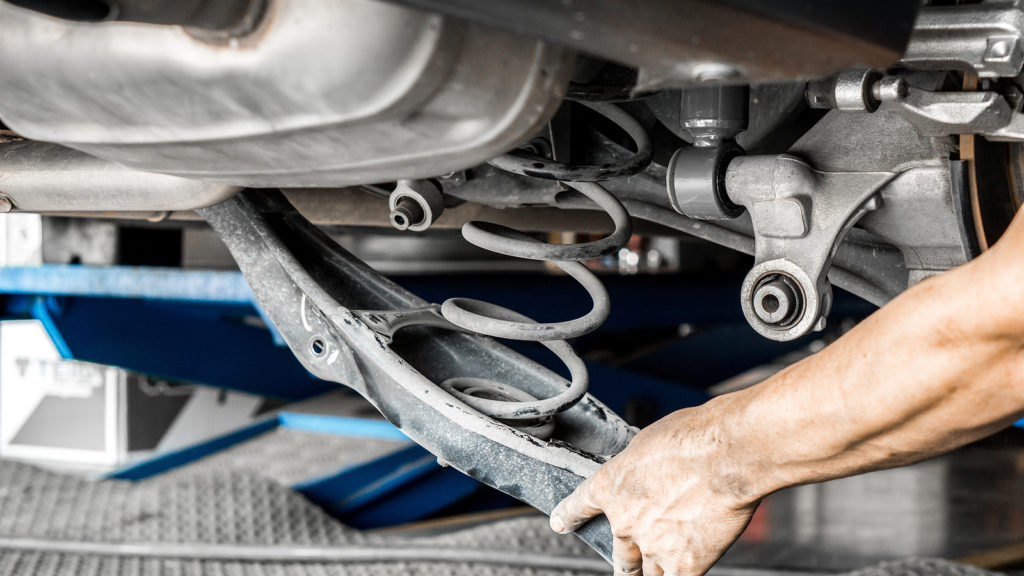
A handful of parts work together here:
- Shocks
- Struts
- Springs
- control arms
- Bushings
None of them get much credit but together they are doing a lot.
When one of these parts starts to wear you will not get a dramatic warning. It is more of a slow drift, a ride that feels a little looser than it used to, until one day you notice it is actually a problem.
Common Signs of a Bad Suspension
A suspension rarely fails all at once. It sends smaller signals first and most drivers just get used to them without realizing what’s happening. Here’s what to look for:
- Your car keeps bouncing after a bump instead of settling down. That usually means your shocks or struts are wearing out.
- Tires wearing unevenly or in patches has more to do with the suspension than the tires themselves.
- If the car drifts to one side on its own or feels like it sways more than it should through a turn, worn suspension parts are usually why.
- Some drivers notice the front of the car dipping hard when they brake. That means the shocks or struts are not controlling the weight the way they should.
- A clunking or knocking sound over rough roads points to worn bushings or ball joints. It is not subtle and it tends to get worse.
- If you park on level ground and one corner sits lower than the rest that is commonly a sign of a weak or broken spring.
One of these on its own might not mean much. A few of them together is worth getting checked before it starts affecting how the car handles.
How Suspension Issues Are Diagnosed
Checking a suspension properly takes more than glancing underneath the car for a minute. At Supreme Lube, here’s what our technicians actually go through:
- Shocks and struts get checked for leaks, physical damage or reduced resistance.
- Bushings and ball joints are inspected for excess play or cracking.
- Ride height and alignment get looked at too, since a sagging suspension tends to throw alignment off along with it.
- Tire wear patterns are examined, because they often tell you more about the suspension than about the tires.
That last step matters more than people expect. A lot of “bad tires” turn out to be a suspension problem wearing them down unevenly.
Why Choose Supreme Lube for Suspension Repair
There is not really a one size fits all fix for suspension issues and getting it right takes actual hands on experience with the parts involved. At Supreme Lube, our technicians take the time to look the vehicle over properly and walk you through what they find before touching anything.
A few things you can count on when you come in:
- No appointment needed. Just drive into our Pickering or Etobicoke location and we’ll take a look.
- We only recommend what your car actually needs, nothing extra tacked on.
- Our technicians have worked on suspension systems across a wide range of makes and models so they know what they are looking at.
- And with locations in both Pickering and Etobicoke, getting it checked does not mean going far out of your way.
Final Thoughts
Catching the signs of a bad suspension early usually means a smaller fix instead of a bigger one later. It is worth having someone take a look if your ride feels bouncier than it used to and if the car pulls to one side or your tires are wearing strangely.
Stop by Supreme Lube in Pickering or Etobicoke for honest suspension check from technicians who will tell you exactly what is going on with your vehicle. No appointment needed. Contact us or just come by either location whenever works for you.
FAQs
How much does suspension repair typically cost?
It really depends on which parts need work and what you drive. Replacing a single shock or strut is generally a smaller job than fixing several components at once so the best move is getting it inspected first to see what you are dealing with.
Can I still drive with a bad suspension?
Short trips are probably fine. But a worn suspension affects your handling or your braking distance and how your tires wear so it is not something to sit on for too long. If you are noticing pulling and bouncing or odd noises get it looked at immediately.
How long do shocks and struts usually last?
Somewhere in the range of 80,000 to 100,000 kilometres for most vehicles though rough roads and harsh conditions can shorten that quite a bit.
What is the difference between shocks and struts?
Shocks handle the up and down motion of your suspension and soak up bumps. Struts do that too, but they also work as part of the vehicle’s structural support in the front end. Most cars use one setup or the other depending on how they are built.
Can a bad suspension cause uneven tire wear?
Yes and it is more common than people think. When suspension parts wear out the tires stop sitting flush against the road the way they should and that uneven contact shows up as patchy or uneven wear.