
Shocks vs. Struts: Understanding the Difference
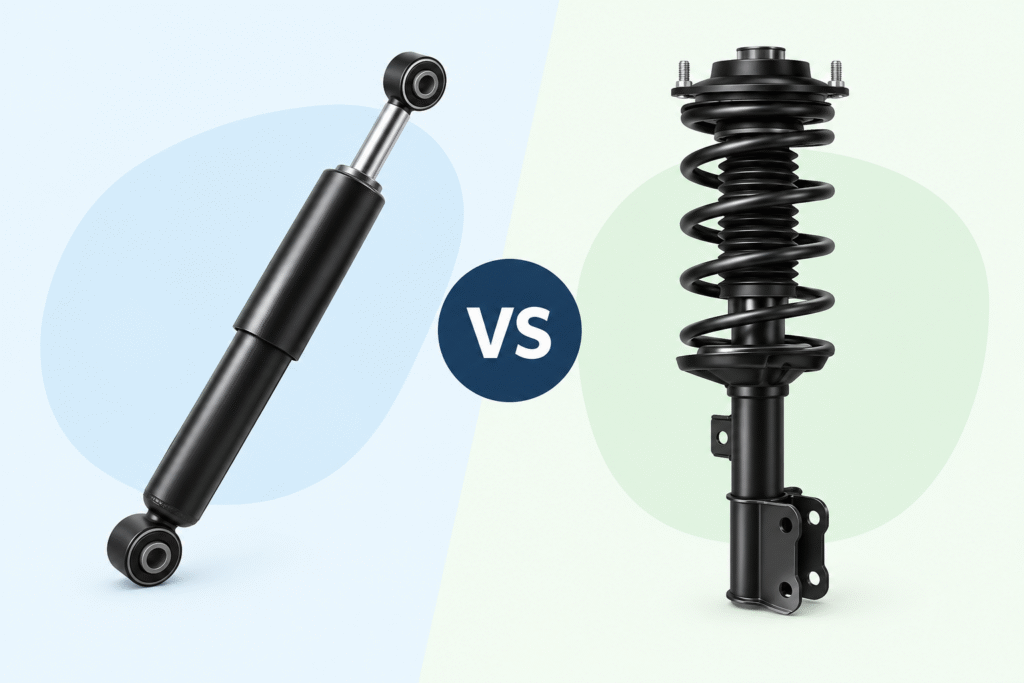
Shocks and struts both control how a vehicle absorbs bumps, but they are not the same part. A shock is a standalone damping component. A strut combines that same damping function with a spring and structural support built into one assembly. Knowing which one your car uses and which one is worn, changes both the diagnosis and the repair. We check for this distinction every week across our Pickering and Etobicoke bays, since it affects the parts we order and what the repair actually costs you. Here is how we tell shocks and struts apart and what each one is doing under your car right now. What Shocks Do A shock absorber controls how fast your springs compress and rebound after hitting a bump. A piston pushes against hydraulic fluid inside the shock and that resistance slows the spring down. This helps to settle down your car instead of bouncing repeatedly. Shocks mount separately from the spring between the frame and a suspension arm or axle. Shocks do not bear the weight of the vehicle. Their only job is managing motion which is why a worn shock tends to show up as excess bounce rather than a change in ride height. What Struts Do A strut does everything a shock does. It also acts as a structural part of the suspension. The coil spring wraps around the strut body and the whole assembly replaces the upper control arm found in more traditional suspension setups. That makes struts weight bearing and it means they influence alignment too, since they help hold the wheel in position as it steers and turns. Most front wheel drive vehicles use struts up front and shocks in the rear. Some vehicles use struts on all four corners and it is rare though not impossible to find a car built with shocks only. Shocks vs Struts: The Main Differences Aspect Shocks Struts Structural role Standalone, not weight bearing Weight bearing, part of the suspension frame Includes the spring No, spring is separate Yes, spring is built into the assembly Affects alignment Rarely Yes, since it holds the wheel position Common location Rear axle on many vehicles Front axle on most vehicles Replacement Can often be done individually Typically requires spring compression tools Signs You Need Shocks or Struts Replaced Excess bouncing – Worn shocks or struts are usually the reason if your car keeps bobbing after a bump instead of settling quickly. Nose diving under braking – A noticeable dip at the front of the car when you brake hard often points to worn struts up front. Uneven or cupped tire wear – Tires that bounce instead of staying flat on the road wear unevenly, sometimes in a scalloped pattern. Fluid leaking from the unit – A visible leak on the shock or strut body means the seal has failed and it needs replacing. Clunking or knocking over bumps – This can point to a worn strut mount or bushing in addition to the shock or strut itself. Why the Difference Matters for Your Repair Bill Struts generally cost more to replace than shocks, mainly because of the labor involved. A shock absorber can often be unbolted and swapped without much extra work. A strut assembly usually needs the coil spring compressed and released safely which takes specialized tools and more time on the lift. That is also why getting the terminology right matters when you are comparing quotes between shops, since a quote for shocks and a quote for struts are rarely apples to apples. Getting Them Fixed at Supreme Lube We inspect shocks and struts as part of our suspension checks at both our Pickering and Etobicoke locations, no appointment needed. If a part is worn, we walk you through exactly what we found before any work begins and we explain whether one side needs attention or both, since that changes the cost. You can learn more about our shop or reach out to our team if your ride feels bouncier or looser than it should. FAQs Are shocks and struts the same? No. People use the words interchangeably as they are not the same. A strut supports the car’s weight and includes a spring whereas a shock only helps control movement. Do I need to replace both at once? Not always. They are usually replaced in pairs on the same side of the car. If one is worn out then the other may be close behind. How do I know which one my car has? It depends on the car and model. Many front wheel drive cars have struts in front and shocks in the back but not all. If I can only replace one now which should go first? Replace the one that shows more wear like leaking and uneven tire wear or the car dipping when braking. How long do they last? Usually between 80,000 and 160,000 km depending on road conditions and driving habits.
How Do You Know If Your Shocks Are Damaged or Just Worn Out?
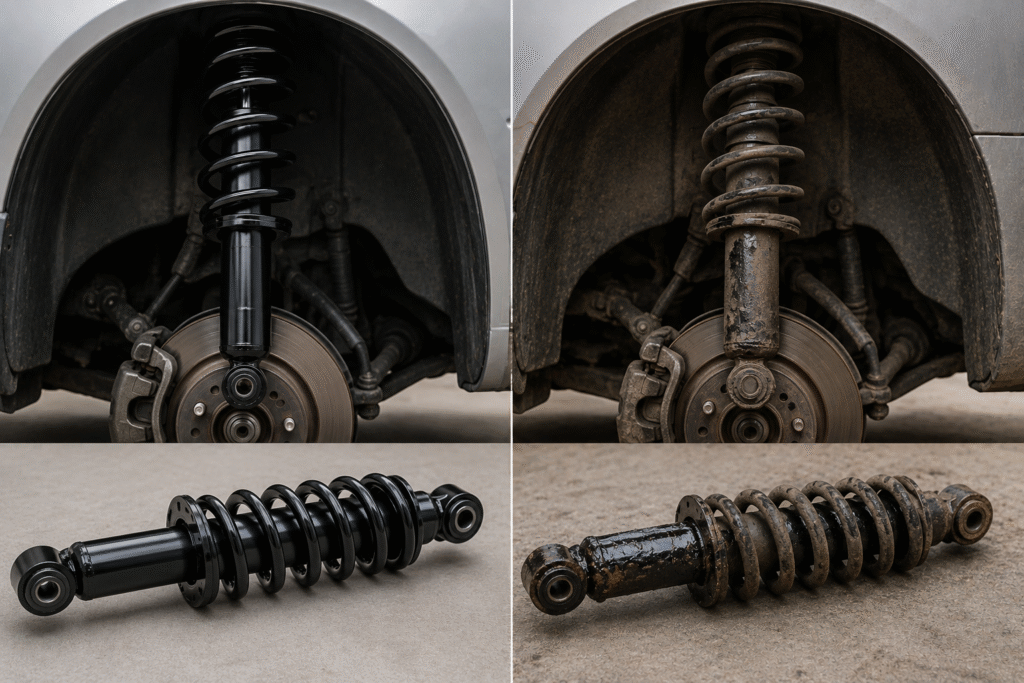
Every driver notices a bumpier ride sooner or later and the question that follows is almost always the same. Is this normal wear or is something actually damaged? Knowing the difference matters because it decides whether your car needs routine attention or a closer look right away. Your worn shocks or damaged shocks affect more than comfort. They influence tire life or braking control and how confidently your car handles the road. What Worn Shocks Feel Like Wear happens gradually so slowly that drivers adjust to it without noticing. Common signs include: This kind of change builds up over tens of thousands of kilometres and is a normal part of a vehicle aging. It will not necessarily point to a problem needing immediate correction but it is worth having checked during a routine visit. What Damaged Shocks Look and Feel Like Damage is more likely to show up suddenly rather than slowly after hitting a deep pothole and curb or rough patch of road. Signs to watch for include: If any of these show up, it is a good idea to have the suspension looked at sooner rather than later, since damage does not improve on its own. Why This Difference Matters Wear is something you plan around. Damage is something you address promptly. Knowing which one you are dealing with helps you make an informed decision instead of guessing. Our team regularly walks customers through this exact distinction as part of our suspension services, explaining what we see and why so you understand the condition of your vehicle before any work begins. How Tire Wear Can Point Back to Your Suspension Shocks and struts help to keep your tires in steady contact with the road. Tires can develop cupping or scalloped patterns when they lose that control and that show up long before the ride itself feels off. It is worth mentioning to your technician if you have noticed uneven wear during a recent tire service as tire condition and suspension health are closely connected. The National Highway Traffic Safety Administration notes that tire condition plays a direct role in vehicle handling and overall safety which is part of why routine inspection matters. A Simple Way to Check at Home Press down firmly on one corner of your car and release it. A healthy suspension should settle after one gentle rebound. If it continues bouncing that corner may be worth a closer look. This test is a helpful starting point not a full diagnosis and it works best alongside a proper inspection. Why Drivers Trust Supreme Lube With This Suspension issues are not always easy to judge from the driver’s seat which is exactly why an experienced eye matters. At Supreme Lube, our technicians inspect shocks and struts or related suspension components with the same honest and no pressure approach we bring to every service along with explaining what is wear or what is damage and what can simply be monitored. Get Your Suspension Checked at Supreme Lube If your ride has started to feel different, do not wait for it to become a bigger question. Visit Supreme Lube in Pickering or Etobicoke for a straightforward suspension inspection. No appointment needed just honest advice from a team that treats your vehicle like their own. Contact us today or stop by for a walk in visit. FAQs How do I know if it is my shocks or just worn tires causing the bounce? A bounce test and a visual inspection tell the two apart as tire wear follows a pattern caused by the suspension rather than the other way around. Can I keep driving with damaged shocks for a while? It is possible in the short term but handling and stopping control may be reduced so having it inspected soon is a good idea. What is a quick way to test my shocks at home? Press down on a corner of the car and let go. One smooth rebound is normal but repeated bouncing suggests it is time for a check. Are shocks and struts the same part? They are related but not same. Struts combine a shock absorber with a structural suspension component while shocks are a standalone part in many vehicles. How should shocks be inspected? Most vehicles benefit from a suspension check during regular maintenance visits, especially after 60,000 kilometres or any noticeable change in ride quality.
How to Tell if Your Suspension Needs Repair
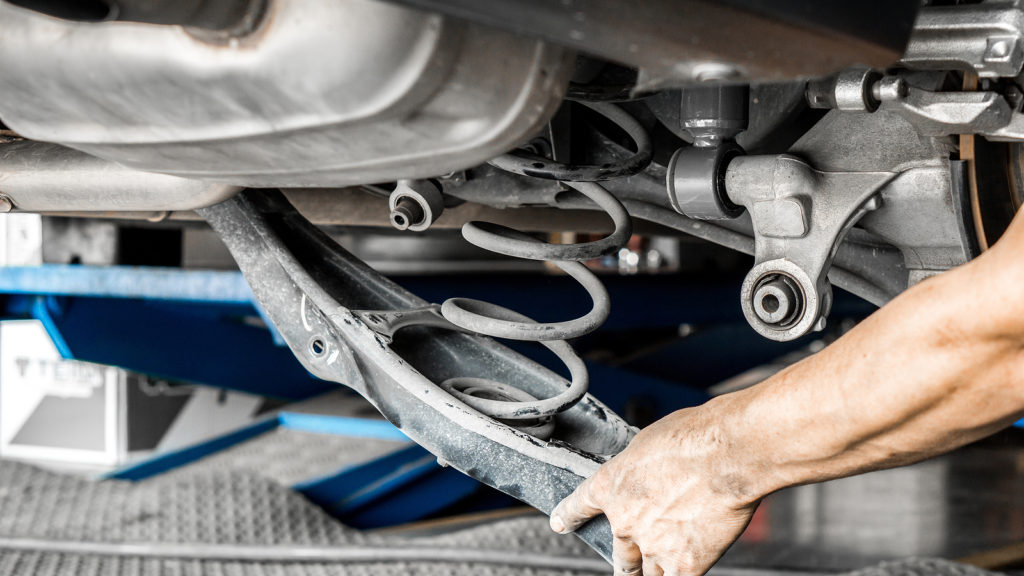
People do not think about their suspension until something feels wrong. It is one of those systems that works quietly soaking up bumps and keeping your tires where they belong right up until it does not. Then suddenly you are noticing every pothole and wondering if it is normal. Below are the signs of a bad suspension worth paying attention to, why they tend to show up sooner for drivers around the GTA and what a proper inspection at a shop like Supreme Lube actually involves. What Your Suspension System Actually Does A handful of parts work together here: None of them get much credit but together they are doing a lot. When one of these parts starts to wear you will not get a dramatic warning. It is more of a slow drift, a ride that feels a little looser than it used to, until one day you notice it is actually a problem. Common Signs of a Bad Suspension A suspension rarely fails all at once. It sends smaller signals first and most drivers just get used to them without realizing what’s happening. Here’s what to look for: One of these on its own might not mean much. A few of them together is worth getting checked before it starts affecting how the car handles. How Suspension Issues Are Diagnosed Checking a suspension properly takes more than glancing underneath the car for a minute. At Supreme Lube, here’s what our technicians actually go through: That last step matters more than people expect. A lot of “bad tires” turn out to be a suspension problem wearing them down unevenly. Why Choose Supreme Lube for Suspension Repair There is not really a one size fits all fix for suspension issues and getting it right takes actual hands on experience with the parts involved. At Supreme Lube, our technicians take the time to look the vehicle over properly and walk you through what they find before touching anything. A few things you can count on when you come in: Final Thoughts Catching the signs of a bad suspension early usually means a smaller fix instead of a bigger one later. It is worth having someone take a look if your ride feels bouncier than it used to and if the car pulls to one side or your tires are wearing strangely. Stop by Supreme Lube in Pickering or Etobicoke for honest suspension check from technicians who will tell you exactly what is going on with your vehicle. No appointment needed. Contact us or just come by either location whenever works for you. FAQs How much does suspension repair typically cost? It really depends on which parts need work and what you drive. Replacing a single shock or strut is generally a smaller job than fixing several components at once so the best move is getting it inspected first to see what you are dealing with. Can I still drive with a bad suspension? Short trips are probably fine. But a worn suspension affects your handling or your braking distance and how your tires wear so it is not something to sit on for too long. If you are noticing pulling and bouncing or odd noises get it looked at immediately. How long do shocks and struts usually last? Somewhere in the range of 80,000 to 100,000 kilometres for most vehicles though rough roads and harsh conditions can shorten that quite a bit. What is the difference between shocks and struts? Shocks handle the up and down motion of your suspension and soak up bumps. Struts do that too, but they also work as part of the vehicle’s structural support in the front end. Most cars use one setup or the other depending on how they are built. Can a bad suspension cause uneven tire wear? Yes and it is more common than people think. When suspension parts wear out the tires stop sitting flush against the road the way they should and that uneven contact shows up as patchy or uneven wear.
Ball Joint Replacement: Symptoms, Causes & Cost
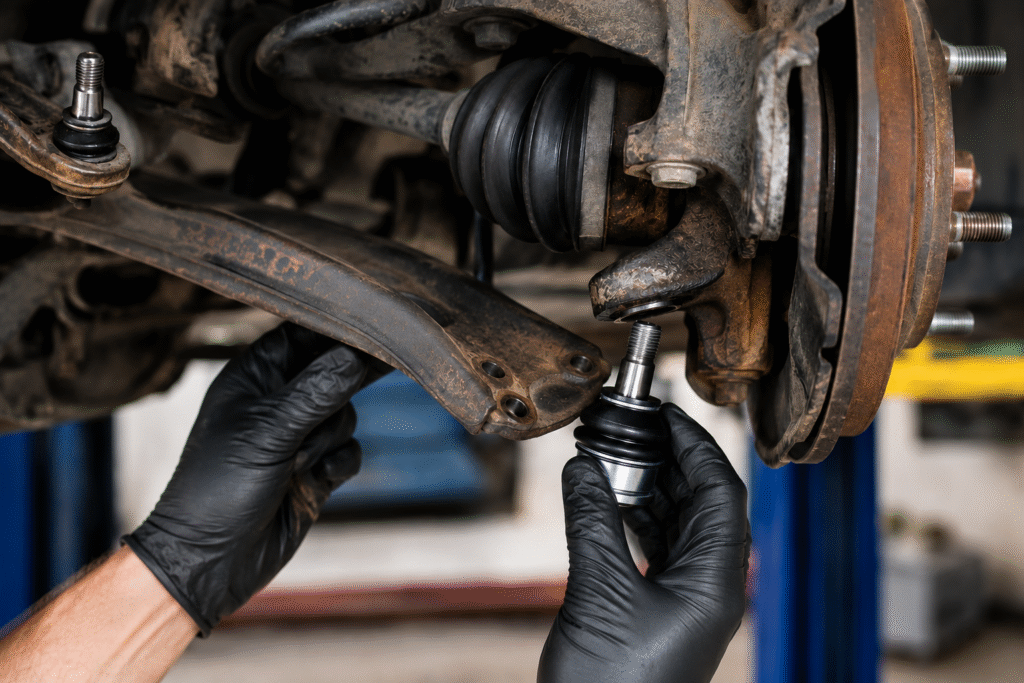
Ball joints do not ask for much attention which is exactly why most drivers never think about them until something starts clunking. They are small parts doing a big job connecting your wheels to the suspension and letting them pivot as you steer. If you’ve landed here because something feels off with your car, this covers what wears these parts down, what to listen for and what affects ball joint replacement cost. What a Ball Joint Actually Does Think of a hip joint with a ball sitting inside a socket and you are pretty close to how this works. It sits between the wheel hub and the control arm letting the suspension move while the wheel still turns as you steer. They are built to take a beating for years. But nothing lasts forever. Grease dries out, rubber boots split and eventually the metal inside wears thin. Signs a Ball Joint Is Going Bad There is usually a pattern to how this shows up. None of this is worth sitting on. Once a ball joint fails completely, it can affect your ability to steer. What Wears a Ball Joint Out Faster Age and mileage will get every ball joint eventually but a few things speed that up. Some ball joints are sealed and never need grease. Older or serviceable ones do. A proper inspection will tell you which kind is under your vehicle. What Actually Drives the Cost Ball joint replacement cost swings more than most people expect. The vehicle is the biggest factor. On some cars the ball joint is its own part. On others it comes with the control arm, changing both the parts bill and the labour time. Whether it is upper or lower, one side or both and whether an alignment is needed afterward all affect the final number. If you are already due for a wheel alignment or have a tire check booked, it is a good time to have your suspension looked at as well. Why This One Is Not Worth Guessing On This is a safety critical part and getting the diagnosis right matters just as much as the repair. In Ontario, steering and suspension components, including ball joints, are checked for a Safety Standards Certificate. At Supreme Lube, our technicians check for play in the joint, inspect the boot condition and look at your tire wear before recommending anything. We will walk you through what we found and why. Getting It Looked At No appointment needed at either our Pickering or Etobicoke location. Walk in and we will take a look. Whether you have noticed one of the signs above or it has been a while since your suspension was checked, it is worth getting ahead of it before a little play turns into a bigger job. Book Your Inspection With Supreme Lube FAQs Can I keep driving with a bad ball joint? For short trips with mild wear, plenty of people do. It is not something to lean on for long. How long does a ball joint replacement take? Usually between one and a few hours, depending on the repair. Do I need to replace both ball joints at once? Not always. If one side checks out fine, replacing just the worn side is common. Does a bad ball joint cause uneven tire wear? It can. As the joint wears, it quietly shifts alignment. Is clunking always a ball joint problem? Not necessarily. Sway bar links, tie rod ends and strut mounts can make a similar noise. That is why a proper inspection beats guessing.